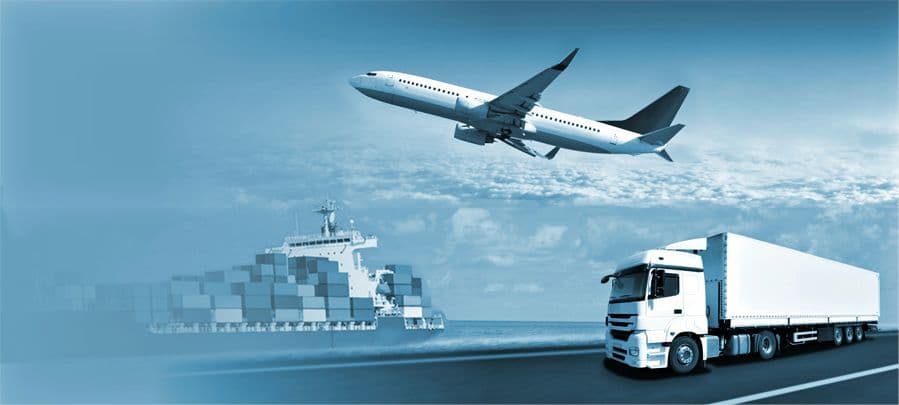
International freight moves by three primary modes: road, air, and sea. Each has different cost structures, transit times, capacity limits, and suitability for different cargo types. Understanding how they differ helps you choose the right option for your shipment and avoid paying more than necessary.
Road Freight
Road freight is the dominant mode for intra-European shipping. A standard road freight truck carries up to 33 pallets (approximately 24,000 kg) and can reach most European destinations within one to five business days. The road network connects every address, making it the only mode that offers true door-to-door service without transshipment.
Road freight divides into full truckload (FTL), where you use the entire truck, and less-than-truckload (LTL), where your goods share space with other shippers' cargo. LTL is what most small and medium businesses use. It is cost-effective for shipments between 100 kg and 5,000 kg across European borders.
Road freight is affected by traffic, border crossing times, and driver hours regulations under EU rules (maximum 9 hours driving per day, mandatory rest periods). These factors are already factored into published transit times by reliable carriers.
Air Freight
Air freight is the fastest mode for international shipments and the most expensive per kilogram. A standard air freight shipment from Lisbon to New York typically takes two to three business days door to door. The same shipment by sea takes 12 to 18 days.
Air freight is priced by chargeable weight, which is whichever is higher: actual weight or volumetric weight (length x width x height in cm divided by 6000 for air). This makes it expensive for large, light shipments. It is best suited to high-value, time-sensitive, or perishable goods where speed justifies the cost premium.
Air cargo travels in the belly of passenger aircraft or on dedicated freighter aircraft. Most airports have freight terminals that process cargo separately from passenger baggage. Customs clearance at destination typically adds 12 to 48 hours to transit time.
Sea Freight
Sea freight is the cheapest mode for large international shipments, particularly intercontinental. A standard 20-foot shipping container holds approximately 25,000 kg or 25 cubic metres. A 40-foot container doubles that capacity. Like road freight, sea offers full container load (FCL) and less-than-container load (LCL) options.
Transit times are long. Europe to North America: 8 to 14 days. Europe to East Asia: 20 to 35 days. Europe to South America: 18 to 25 days. These times exclude port processing and inland transport at both ends, which typically add two to five business days.
Sea freight is the right choice for non-urgent, heavy, or bulky cargo where road or air costs would be prohibitive. Electronics, furniture, machinery, clothing, and raw materials regularly move by sea.
Choosing the Right Mode
Time is usually the deciding factor. If delivery must happen within a week across continents, air freight is the only realistic option. If two to four weeks is acceptable, sea freight is far cheaper. For Europe-to-Europe shipments, road freight offers the best combination of speed and cost for almost all cargo types.
For very small international shipments (under 30 kg), courier services — which use a combination of air and road — are typically cheaper and faster than booking formal air freight, because they consolidate shipments and have pre-negotiated airline rates.