Pallet shipping is the standard method for moving large, heavy, or bulky goods over medium to long distances. It is used by manufacturers, wholesalers, and retailers to transport goods that are too large or too numerous to ship as individual parcels. Understanding when pallet shipping makes sense — and how to prepare a pallet correctly — avoids expensive mistakes.
What Is a Pallet Shipment
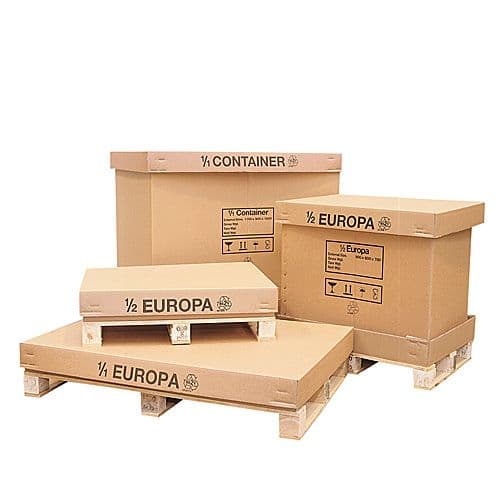
A pallet is a flat wooden platform onto which goods are stacked and secured. Standard sizes in Europe are the euro pallet (120 x 80 cm) and the industrial pallet (120 x 100 cm). Quarter and half pallets are also used for smaller loads. Goods are secured to the pallet with stretch wrap, strapping, or both, and the loaded pallet is moved by pallet truck or forklift.
Pallet shipments are carried by freight carriers rather than parcel couriers. They move in curtain-sided trailers, rigid trucks, or dedicated freight vehicles rather than the vans used for parcel delivery.
When to Use Pallet Shipping
Pallet shipping makes sense when: your shipment weighs more than 30 to 40 kg, you have multiple large boxes that benefit from consolidation, your goods are fragile or high-value and benefit from stable, single-platform handling, or your goods are oversized and cannot be safely packed in a standard box.
For shipments between 100 kg and 500 kg, a pallet is almost always cheaper than sending the equivalent in individual parcels. For lighter loads, compare individual parcel and pallet prices — pallet services have a minimum charge that sometimes makes them less cost-effective below a certain weight.
Standard Pallet Weight and Height Limits
A euro pallet can structurally carry up to 1,500 kg, but freight carriers typically cap pallet shipments at 500 to 750 kg for network handling. Maximum stack height is usually 120 to 150 cm (excluding the pallet height of 15 cm). Goods must not overhang the pallet edges. Overhanging loads are a safety risk and will be refused at collection.
How to Prepare a Pallet
Stack heavier items at the bottom and lighter ones on top. Keep the load stable and evenly distributed across the pallet surface. Wrap the entire load in stretch film, applying at least two passes all the way around the load and overlapping each pass by half. For high-value or fragile goods, add horizontal strapping over the stretch film. Place a pallet label on each of the four sides.
Collection and Delivery Requirements
Pallet collections and deliveries require ground-floor access. The driver will have a pallet truck (hand pump truck) but not a forklift. If your premises require a forklift or tail-lift vehicle, inform the carrier at booking — these are available but must be pre-arranged and attract an additional charge. Pallet deliveries cannot be made above ground floor without specialist equipment.
Transit Times and Tracking
European pallet freight typically takes two to five business days depending on distance. Same-day and next-day pallet services are available on major routes at a premium. Pallet shipments are tracked using a consignment note number (CMR number), which you will receive at collection. Tracking granularity is lower than parcel couriers — typically you see collection confirmed, in transit, and delivered.