Poor packaging is the leading cause of parcel damage claims in the courier industry. Carriers handle tens of thousands of parcels every day through automated sorting systems, and packages are stacked, moved by conveyor, and loaded onto vehicles multiple times before reaching their destination. A well-packed parcel withstands all of this without any damage to the contents.
Choosing the Right Box
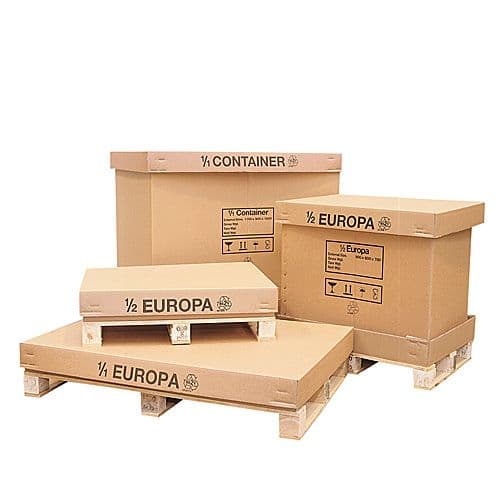
Use a new, double-walled cardboard box where possible. Single-wall boxes are acceptable for light, non-fragile items but compress under stack pressure. Double-wall boxes provide significantly more protection for anything heavy or fragile. The box should be large enough to fit the item plus a 5 to 7 cm cushioning layer on all six sides.
Never reuse a box that has visible damage — crushed corners, torn edges, or water staining indicate the structural integrity has been compromised. Carriers are within their rights to refuse a parcel with inadequate packaging, and damage to contents in a box that was visibly inadequate may not be covered under insurance.
Internal Cushioning
All empty space inside the box should be filled. Movement inside the box during transit is a primary cause of damage. Use bubble wrap, foam sheets, packing peanuts, crumpled brown paper, or air pillows. For fragile items, wrap each piece individually in bubble wrap before placing in the box.
For electronics, use anti-static bubble wrap (pink) rather than standard clear wrap. For liquids, double-bag the container in sealed plastic bags before cushioning, and mark the parcel clearly as containing liquids. For multiple items in one box, separate each with additional cushioning so they cannot knock against each other.
Sealing the Box
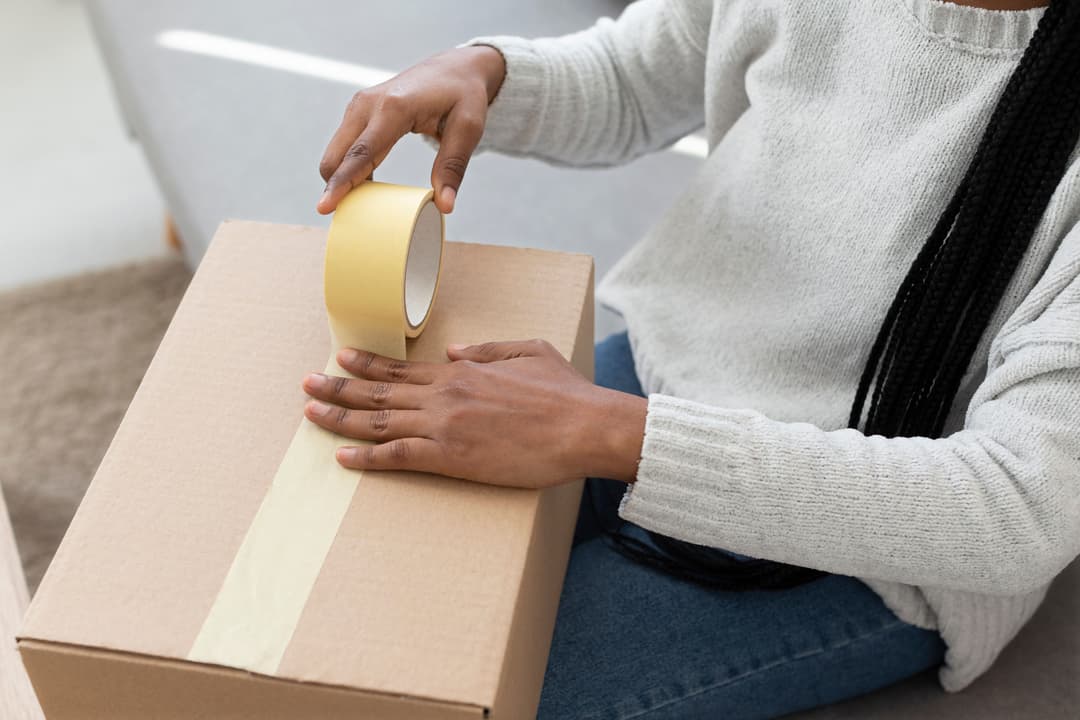
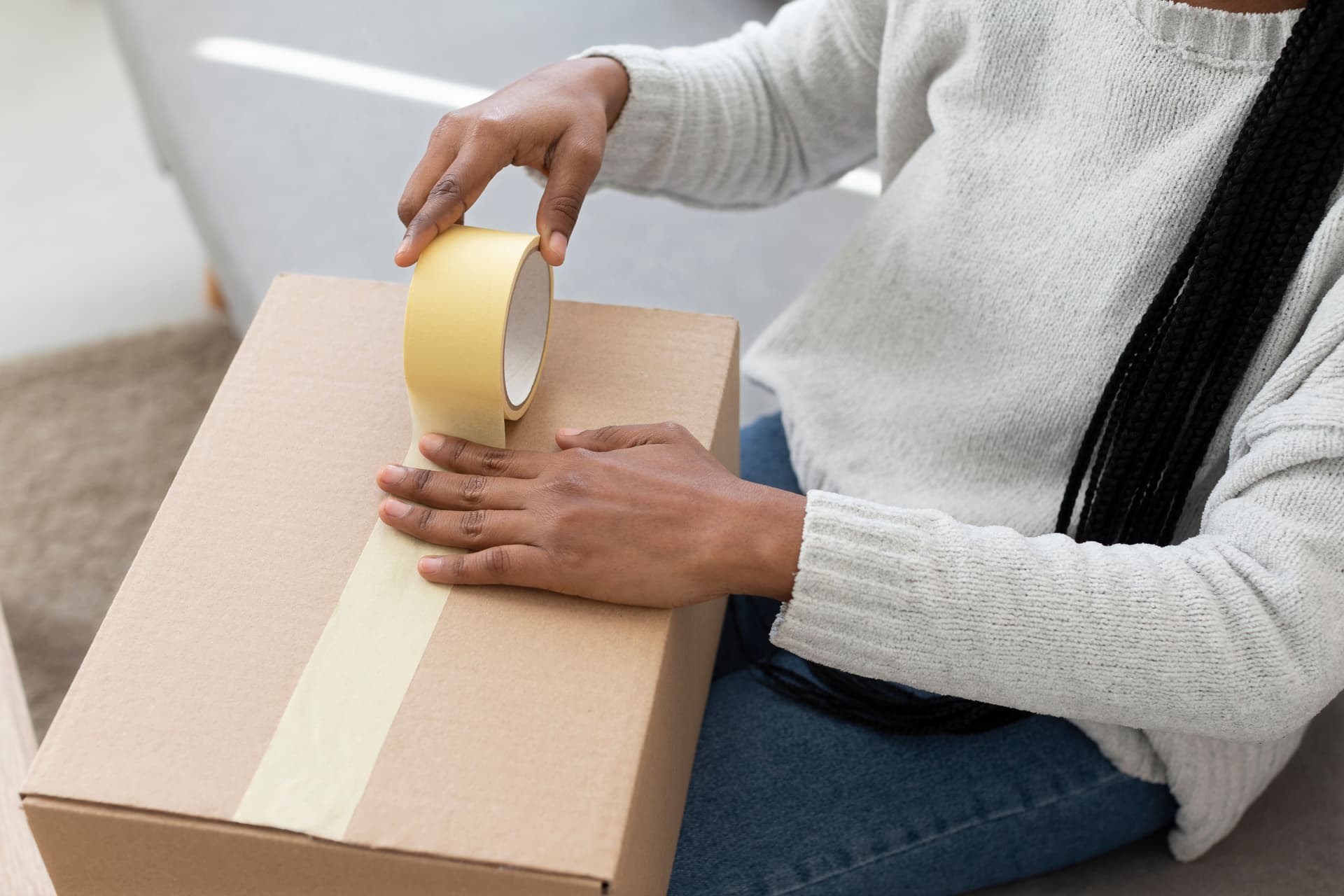
Use packing tape — not masking tape, duct tape, or string. H-tape the top and bottom of the box: one strip along the centre seam and one strip along each of the two side seams. This creates a strong, reinforced seal. For heavy parcels, apply two layers of tape on the bottom.
Do not use string or rope to close parcels. It catches in conveyor rollers and can damage both your parcel and sorting equipment.
Labelling
Print the shipping label on plain white paper and place it in a clear adhesive label pouch or tape it securely to the largest flat face of the box. The label must be flat — no creases over the barcode. The barcode must be scannable; wrinkles or bubbles can cause scan failures that delay your shipment.
Remove or cover all old labels, barcodes, or shipping marks from reused boxes. Old barcodes can be misread by automated systems, routing your parcel to the wrong destination.
Special Considerations
Liquids must be sealed inside leak-proof containers, placed in sealed plastic bags, and surrounded by absorbent material. Fragile items must be packed so that the internal cushioning, not the item itself, makes contact with the box wall. The drop test is a useful check: gently shake the sealed box — if you hear movement, add more cushioning.
For irregularly shaped items that do not fit in a standard box, wrap them completely in stretch wrap or bubble wrap and tape to make a regular shape before applying the shipping label. If you are unsure whether your item can be shipped, contact Cargosender before booking.