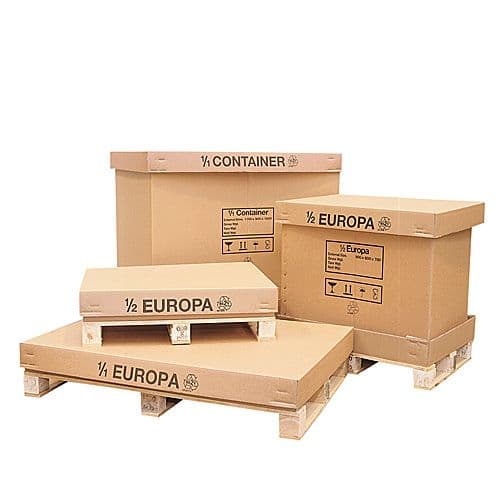
Large packages require different handling from standard parcels and are subject to size and weight limits that vary significantly between carriers. Understanding where the boundaries are — and what options exist when a parcel exceeds them — saves time and avoids refused collections or unexpected fees.
What Counts as a Large Package
Most courier carriers define their standard parcel limit at 30 kg and 120 x 60 x 60 cm (or a combined length plus girth of 300 cm). Anything exceeding these thresholds is classified as an oversized or large package and may attract additional handling surcharges, be refused by certain carriers, or require booking through a freight service rather than a parcel courier.
Courier Options for Large Parcels
DHL Express, FedEx, and UPS all accept individual parcels up to 70 kg and dimensions up to 274 cm in length, with girth restrictions. These services are expensive for large items but offer the speed and door-to-door convenience of a courier. Surcharges for oversized items can add €30 to €100 per parcel depending on weight and dimensions.
GLS and DPD typically cap at 31.5 kg and 200 cm longest side for their standard parcel networks. Items exceeding these limits must be split across multiple parcels or moved to a freight product.
Pallet Freight for Very Large Shipments
If your item exceeds 30 to 35 kg, or if you have multiple large boxes, consolidating onto a pallet and booking a freight service is almost always cheaper than booking multiple individual oversized parcels. A quarter pallet (60 x 40 cm) handles loads up to 100 kg; a half pallet (80 x 60 cm) takes up to 250 kg; a full euro pallet (120 x 80 cm) carries up to 500 kg.
Pallet freight operates on a different network to parcel couriers — collection and delivery require ground-floor access and a pallet truck or forklift. Transit times are typically two to five business days for European routes, and seven to twenty-one days for intercontinental destinations via sea.
Packing Large Items
Large items need proportionally more packaging. Use double or triple-wall cardboard for heavy items. For machinery, furniture, or fragile large items, use wooden crating — a bespoke wooden frame or full crate provides significantly more protection than cardboard for items that will be handled multiple times.
Secure the item to a pallet using stretch wrap and strapping. The load must not overhang the pallet edges and must be stable enough to survive stacking (for pallet freight, items are sometimes stacked or positioned side by side in trailers).
Customs for Large International Shipments
Large freight shipments crossing international borders require a commercial invoice, packing list, and in some cases an export licence depending on the commodity. For high-value equipment, an EUR.1 movement certificate may be needed to claim preferential customs duty rates under EU trade agreements. Work with a freight forwarder or use Cargosender's guided booking for international freight to ensure all documentation is correct.