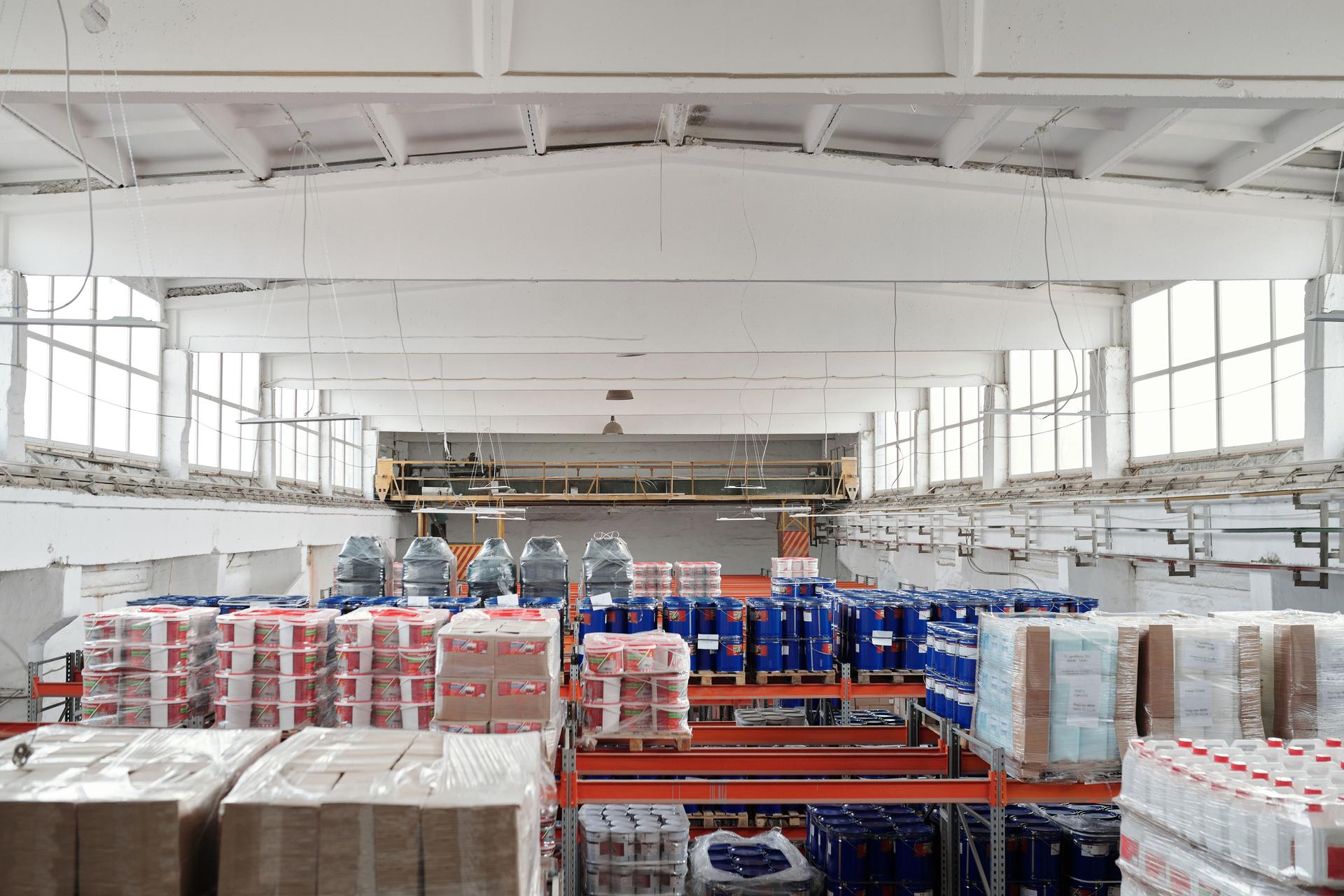
If you're shipping something heavy, bulky, or made up of multiple boxes, you've probably wondered whether you should put it on a pallet or send it as individual parcels. The answer depends on weight, volume, fragility, and how your goods are packaged — and getting it wrong can mean paying more than you need to or having a shipment refused at collection.
This guide explains exactly when pallet shipping makes sense, how pallet pricing is calculated, and what you need to know before booking.
What Is a Pallet Shipment?
A pallet shipment is cargo that's loaded onto a flat wooden platform (a pallet) and transported as a single unit. Rather than handling individual boxes, the courier's team loads, moves, and delivers the entire pallet using a forklift or pallet truck.
Pallet shipping is used for:
- Multiple boxes that exceed the standard parcel weight or size limits
- Heavy single items that would be damaged or difficult to handle as a parcel
- Goods that need to stay together as one unit, such as retail stock or industrial equipment
- Shipments where you want to reduce the risk of items going missing or being separated in transit
Standard Pallet Sizes in Europe
European couriers use two main pallet formats. The Euro pallet (1200 × 800 mm) is the standard you'll encounter with couriers like DHL, GLS, DPD, and FedEx for European collections. When you book through a comparison service, quotes are usually based on this format unless you specify otherwise.
The Euro pallet (EUR/EPAL) measures 1200 × 800 mm and is used for standard loads across all major European couriers. The industrial pallet at 1200 × 1000 mm handles heavier industrial goods with some couriers. A half pallet at 800 × 600 mm suits smaller consolidated loads.
Height limits: most couriers set a maximum loaded height of 160–200 cm, including the pallet itself which adds 14–15 cm. Check the specific courier's limits before loading.
When Does Pallet Shipping Make Sense?
Use a pallet when:
- Your shipment weighs 30 kg or more, especially across multiple boxes.
For loads between 100 kg and 500 kg, a pallet is almost always cheaper than sending the equivalent in individual parcels. For loads between 30 and 100 kg, compare both options — the break-even point depends on the route and dimensions. Most couriers stop accepting standard parcel bookings above 70 kg per single item. Palletised freight handles loads of up to 750 kg–1,000 kg or more for road freight.
- You're sending multiple boxes that belong together.
Sending 10 separate parcels costs significantly more than a single pallet booking and risks boxes arriving on different days.
- Your item is too large for parcel size limits.
Courier parcel limits are typically around 120 cm on the longest side and 300 cm total girth. Larger items require palletised freight.
- You're shipping B2B to a warehouse, factory, or retail stock room that has a loading dock.
Stick with parcels when:
- Your total shipment is under 30 kg and fits within standard parcel dimensions. Parcel booking is faster, cheaper, and more flexible for lightweight goods.
- You need residential delivery. Most pallet couriers deliver to commercial addresses with loading equipment. Residential pallet delivery is possible but more expensive and requires planning.
- Speed is critical. Express parcel services typically have more flexible collection and delivery windows than pallet freight.
How Pallet Shipping Is Priced
Pallet shipping pricing is different from parcel pricing, and understanding the difference prevents surprises.
Parcels: priced on actual or volumetric weight
For parcels, couriers charge based on whichever is higher: the actual weight or the volumetric (dimensional) weight. Volumetric weight is calculated as: (Length cm × Width cm × Height cm) ÷ 5000 = volumetric weight in kg. A light but bulky item — like packaging foam or a large lampshade — can cost as much to ship as a much heavier compact item.
Pallets: priced on loaded pallet dimensions
Pallet shipping quotes are usually based on the number of pallet spaces required, total loaded weight, loaded dimensions, and origin/destination. The important thing: pallet pricing is calculated per pallet, not per kg above a threshold. Once you're in pallet territory, you pay for one or more pallet spaces. That's why sending 10 small boxes as a single pallet usually costs less than 10 individual parcel bookings.
What drives your final pallet price
- Weight: heavier pallets cost more, usually with pricing bands (0–200 kg, 200–500 kg, 500–1,000 kg)
- Height: a taller pallet may be priced as 1.5 or 2 pallet spaces if it exceeds the courier's standard height limit
- Distance and zones: European cross-border pallet rates vary significantly by country pair
- Residential delivery: pallets to home addresses rather than commercial premises carry a surcharge with most couriers
Calculating Your Pallet Shipment
Before booking, you need to know: the number of boxes and their individual dimensions, the total stacked height including the pallet base, the total gross weight, and whether your load overhangs the pallet edge.
You can calculate whether your load fits a standard pallet and get an instant price using the Cargosender pallet shipping calculator. Enter your dimensions and weight, and the calculator will confirm which pallet format you need and show live courier quotes.
Preparing Your Pallet for Collection
How to stack your pallet correctly
- Place the heaviest boxes at the bottom, lighter boxes on top. This keeps the centre of gravity low and prevents crushing.
- Stack boxes in a column or brick pattern. Columns give the most stability; bricks distribute weight across layers.
- Don't let boxes overhang the pallet edge. Most couriers won't accept collections if the load overhangs by more than a few centimetres.
- Fill gaps between boxes with packing material to prevent shifting in transit.
- Wrap the entire load in stretch film — at least 3–4 layers, wrapping around the pallet as well as the goods.
Label your pallet clearly
- Attach a shipping label to at least two visible sides of the pallet (usually the front and one short side)
- For international shipments, include customs documentation in a clearly labelled plastic wallet attached to the pallet
- If the pallet contains multiple boxes for different destinations, label each box individually as well
Common Questions
Can I send a pallet internationally?
Yes. Major couriers including DHL Freight, GLS, and DPD offer cross-border pallet services across Europe and beyond. Customs documentation (commercial invoice, packing list, correct HS codes) is required for all shipments leaving the EU.
What if my pallet is too heavy for a standard courier?
Above 1,000 kg or for very large loads, standard pallet courier services are replaced by full or partial truck loads (FTL/LTL freight). These are booked through freight forwarders rather than parcel/pallet comparison tools.
Do I need to provide my own pallet?
Most courier services require you to provide the pallet. Euro pallets (EPAL-stamped) can be purchased from builders' merchants, packing suppliers, or many hardware stores for €10–€20 each.
What is a half pallet?
A half pallet is 800 × 600 mm — half the footprint of a Euro pallet. It's suitable for smaller but still-heavy loads and is priced at roughly half a full pallet space. Not all couriers accept half pallets; check availability when booking.
Ready to Get a Pallet Quote?
If you're unsure whether your shipment needs a pallet, the fastest way to check is to run your dimensions through the pallet calculator. It will tell you whether your load qualifies as a standard pallet, how many pallet spaces it requires, and show you live courier prices from DHL, GLS, DPD and other major carriers.
For shipments that fall in a grey area — heavy single parcels around 50–100 kg, or large boxes close to courier size limits — it can be worth running a quote for both a parcel and a pallet booking and comparing the results.
For a broader overview of pallet shipping including network coverage and standard weight limits, see Pallet Shipping Explained.