Choosing the right packaging type for your shipment affects price, transit time, and whether the carrier will accept it at all. The three main formats used in the courier and freight industry are envelopes, boxes (parcels), and pallets. Each serves a different purpose and has different weight and size limits.
Envelopes
In the courier industry, envelopes refer to flat, lightweight shipments — not just paper envelopes, but also padded mailers and document pouches. Most carriers define an envelope shipment as anything under 0.5 kg to 1 kg and with a thickness below 3 to 5 cm depending on the carrier.
Envelopes are the cheapest and fastest format. They move through automated sorting systems without manual handling and typically transit faster than parcels on the same route. They are ideal for documents, contracts, certificates, photographs, and small flat items. They are not suitable for anything fragile, three-dimensional, or over the weight limit.
Boxes (Parcels)
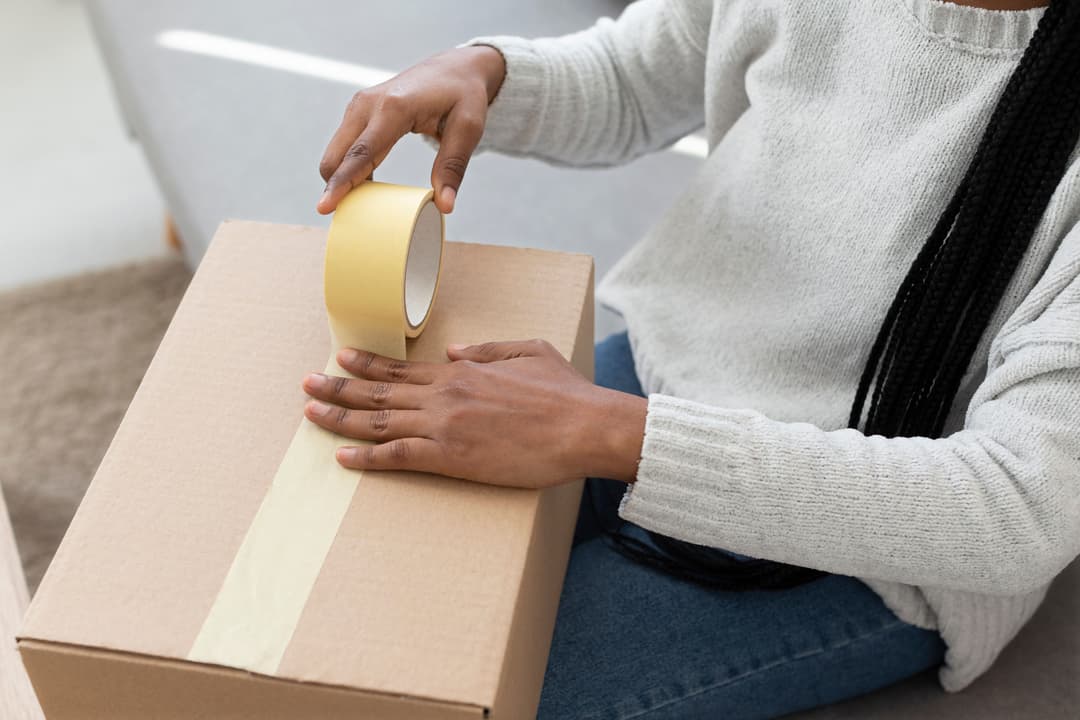
Boxes cover everything from a small 20x15x10 cm packet weighing 0.5 kg up to large cartons weighing 30 kg or more. Most standard courier services accept parcels up to 30 kg and up to 120 x 60 x 60 cm in dimensions, though this varies by carrier and route.
Parcels are the most versatile format and what most people think of when booking a courier. They are handled individually through sorting facilities and delivery vehicles. Fragile items should be packed in boxes with adequate internal cushioning — bubble wrap, foam inserts, or packing paper — because parcels do go through automated sorting conveyors.
Pallets
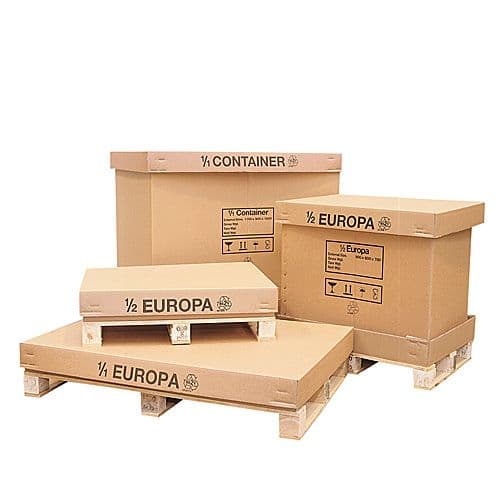
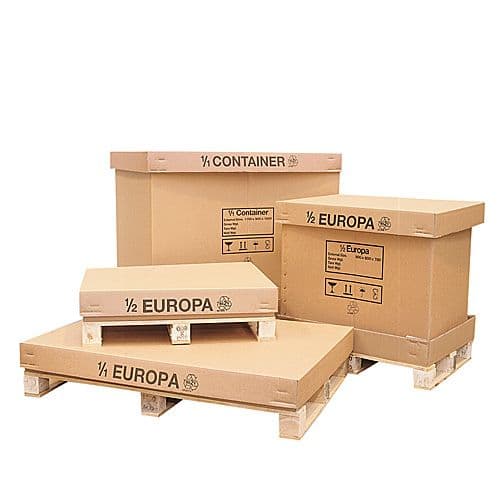
Pallets are used for freight — large, heavy, or bulky shipments that cannot be handled by a single person. A standard euro pallet is 120 x 80 cm and can carry loads up to 500 kg, though courier pallet services typically cap at 250 to 500 kg depending on the carrier. Quarter and half pallets are also available for smaller freight loads.
Pallet shipments require the goods to be stacked and secured on the pallet — strapped, shrink-wrapped, or both. They move via freight networks rather than parcel sorting facilities. Transit times are typically longer than parcel services, and collection and delivery require ground-floor access for pallet trucks or forklifts.
Which Format Should You Choose?
Use an envelope for documents and flat items under 1 kg. Use a box for anything three-dimensional, fragile, or over 1 kg up to around 30 kg. Use a pallet for heavy or bulky freight above 30 kg or for multiple boxes that are better consolidated onto a single platform.
If your shipment sits on the boundary — for example, a 30 kg box versus a quarter pallet — compare prices on Cargosender for both formats. Pallet services are often cheaper per kg for heavy loads and reduce the risk of individual box damage during transit.
Dimensional Weight
Carriers charge based on either actual weight or volumetric (dimensional) weight, whichever is higher. Dimensional weight is calculated as length x width x height (in cm) divided by a divisor, typically 5000 for air freight and 4000 to 5000 for road. A large, light box may therefore cost as much as a smaller, heavier one. Always enter accurate dimensions when booking to avoid surcharges on delivery.