Portugal is a well-connected shipping origin within Europe. Its membership in the EU single market means that sending goods to France, Germany, Spain, or any other EU member state involves no customs formalities — just a standard parcel label. For shipments outside the EU, to the UK, the US, Brazil, or further afield, the requirements change: you will need a commercial invoice, correct HS codes, and an understanding of what happens at the destination country’s customs border.
This guide covers every step of sending a parcel from Portugal internationally — from packing and documentation to booking and tracking.
Step 1: Pack Your Parcel Correctly
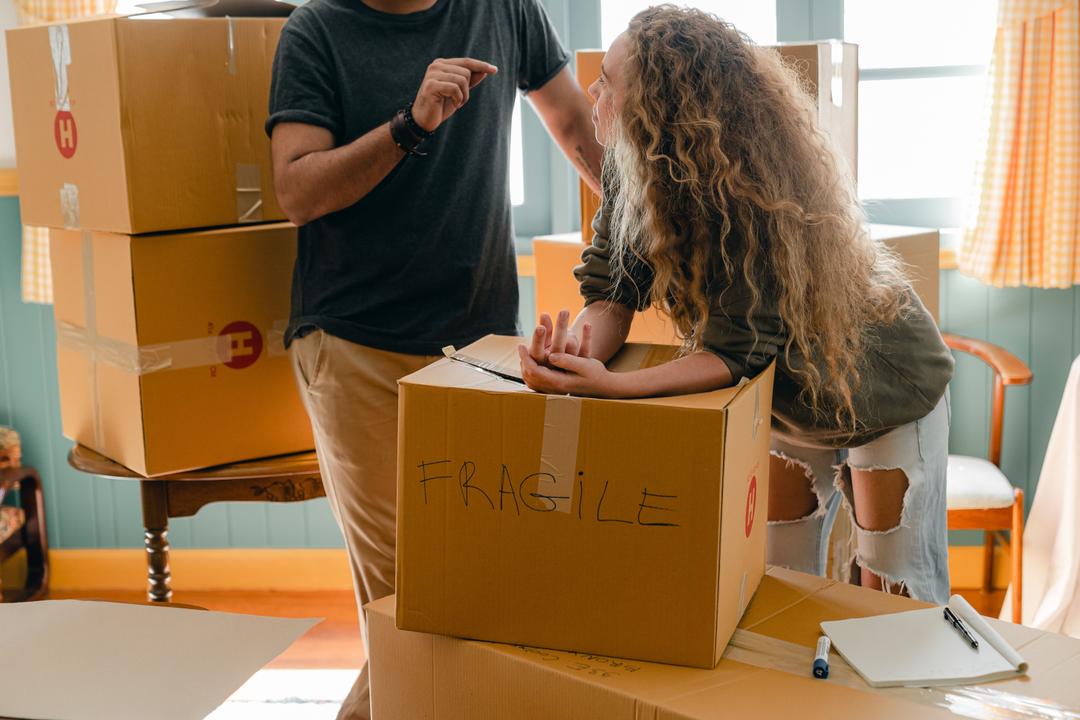
Carriers handle thousands of parcels daily, and inadequate packaging is the leading cause of damage claims. The minimum packing standard for international shipments from Portugal:
- Use a double-walled corrugated cardboard box of an appropriate size — no more than 2–3 cm of empty space on any side
- Wrap fragile items individually in bubble wrap or foam, with at least 5 cm of cushioning material on all sides and between items
- Seal all edges and seams with strong packing tape at least 50mm wide
- Remove or cover old labels from previous shipments to avoid scanning errors at sorting facilities
- Place a copy of the address and sender details inside the box, in case the outer label is damaged in transit
Step 2: Know Whether Customs Applies
The key distinction for shipping from Portugal is whether the destination is inside or outside the European Union:
- Within the EU (France, Germany, Spain, Italy, the Netherlands, Poland, etc.): no customs declaration required. The goods move as internal EU trade. Standard parcel label only.
- Outside the EU (UK, US, Brazil, Switzerland, Norway, etc.): customs declaration required. You must provide a commercial invoice with the item description, quantity, value, and HS code for every item.
Special note on the UK: since January 2021, the UK is outside the EU single market. Shipments from Portugal to the UK are treated as exports and require a full customs declaration, commercial invoice, and HS codes, just as for any non-EU destination.
Step 3: Prepare Your Customs Documents
For shipments outside the EU, every parcel needs a commercial invoice. This document tells customs authorities what is in the parcel, what it is worth, and how it was obtained. A complete commercial invoice includes:
- Full sender name and address (in Portugal)
- Full recipient name and address
- Description of each item (clear and specific, not "gift" or "merchandise")
- Quantity of each item
- Value per item and total value (in EUR or the currency of the sale)
- HS code for each item (at least 6 digits)
- Country of origin of the goods
- Reason for export (commercial sale, personal gift, return, sample)
- Sender’s signature and date
Carriers typically ask for three copies: one attached to the outside of the parcel in a document pouch, one inside the parcel, and one kept by the sender.
Step 4: Check Prohibited and Restricted Items
Some items cannot be shipped internationally from Portugal regardless of the destination. Items that are universally prohibited by carriers include:
- Dangerous goods (explosives, compressed gases, flammable liquids, corrosives) unless specifically declared and packaged to IATA or ADR standards
- Perishable food items without adequate temperature control or phytosanitary certificates
- Live animals
- Currency and negotiable instruments
- Items prohibited by the destination country (e.g., certain foods, alcohol, medications, religious materials)
Restricted items (allowed with conditions) include lithium batteries, perfumes and alcohol-based products, aerosols, and sharp instruments. Always declare these at the time of booking.
Step 5: Get a Shipping Quote and Book
CargoSender’s Portugal shipping calculator lets you enter your parcel dimensions, weight, origin postcode in Portugal, and destination country to compare current rates. Enter the parcel’s actual weight and dimensions rather than estimated figures — volumetric weight is calculated automatically, and carriers may adjust the charge if the declared dimensions are significantly different from the actual parcel.
When you book through CargoSender, Eurosender handles the carrier assignment, label generation, and collection scheduling. The shipping label is generated immediately after payment, ready to print and attach to the parcel.
Step 6: Arrange Collection or Drop Off
Most services booked through CargoSender offer home or business address collection. The carrier’s driver will collect the parcel from the address you specify on the agreed date. For certain services, drop-off at a designated carrier point is an option and may reduce the cost.
Ensure the parcel is packed, labelled, and ready before the collection window. For non-EU shipments, the customs invoice must be attached to the outside of the parcel in a clear plastic document pouch before the driver arrives.
Step 7: Track Your Shipment
After collection, your tracking number is active and can be used to follow the parcel’s progress. For shipments booked through CargoSender, the tracking number is available in your order confirmation. The carrier you have been assigned (DPD, GLS, or another within the Eurosender network) determines which tracking portal to use.
Common Mistakes When Shipping from Portugal
- Using the parcel’s physical weight only. Carriers charge by whichever is greater: the actual weight or the volumetric weight (length × width × height ÷ 5000 for most road services). A large but lightweight box may cost more than its weight suggests.
- Writing “gift” or “surprise” on the invoice. These descriptions are not accepted by customs authorities. Every item must be described accurately.
- Undervaluing goods to reduce import duties. Declaring a lower value than the actual transaction value is customs fraud. Beyond the legal risk, it also means any insurance payout in the event of loss or damage will be based on the declared value.
- Forgetting to remove old labels. Reused boxes with old barcodes from previous shipments can be misrouted at automated sorting facilities.
- Missing the collection window. If the driver cannot collect the parcel, a rescheduled collection may incur an extra fee or require a new booking.
To get the current rate for your specific parcel from Portugal, use CargoSender’s shipping cost calculator. Enter your dimensions, weight, and destination to see today’s prices and book instantly.